2026
Tierra Viva — organic waste turned back into living soil, energy and community
Winning project of the international Transforma e Impacta program (Uniandes, PUC Chile and Tec de Monterrey). A pilot that turns 15 t/year of organic waste into compost, biofertilizer and biogas. I was responsible for the system's scale-up and replicability strategy.
- Renewable energy
- Project management
Context
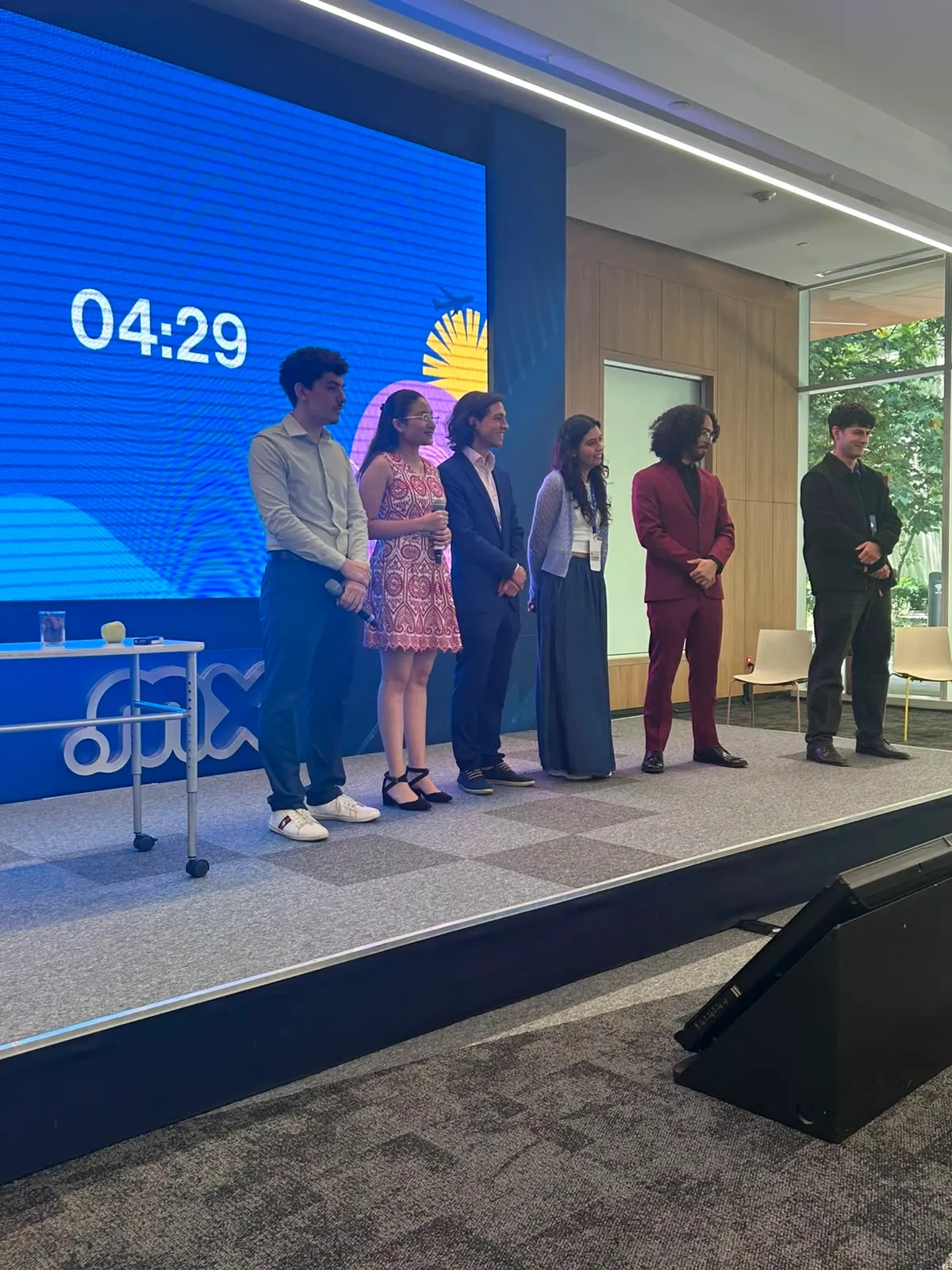
Transforma e Impacta is a leadership program of the Triad: Universidad de los Andes, Pontificia Universidad Católica de Chile and Tecnológico de Monterrey. International teams design social innovation projects over several months, and the final event was in Mexico City in July 2026. Our team won first place, with the Best Pitch and Best Proposal awards.
Problem
The Til Til landfill, which receives Santiago de Chile’s waste, is one of the country’s largest methane emitters. At the Pueblito Las Vizcachas eco-park (Puente Alto), the community already cared for the land, but lacked the technical know-how to treat its own organic waste.
Solution
Together with the community, we designed an integrated circular economy system:
- a 4 m³ composting station for the dry fraction (prunings, leaves, food scraps);
- a 2 m³ biodigester for the wet fraction, producing biogas and biol (a liquid fertilizer);
- a 50 m² urban garden that uses those fertilizers;
- an environmental education program that turns the park into a living classroom.
Of the roughly 40 t/year of waste the park generates, the system treats 15 t/year: 10 by composting and 5 by anaerobic digestion. It produces 3 t of compost and 16,000 L of biofertilizer per year, plus biogas for about three hours of cooking a day. The education target is 5,000 school visits and 250 workshops.
My role: scale-up and replicability
In an interdisciplinary team of environmental engineering, biotechnology and anthropology, I was responsible for the scale-up strategy: how to go from a validated pilot in one park to a system that can be replicated in other territories. We framed it in two stages:
- a modular methodological kit, with the technical and community management procedures documented so another community can adopt it;
- a regional network of biodigesters across neighborhoods, sharing capacity, maintenance and lessons learned.
I also contributed the technical biodigestion component.
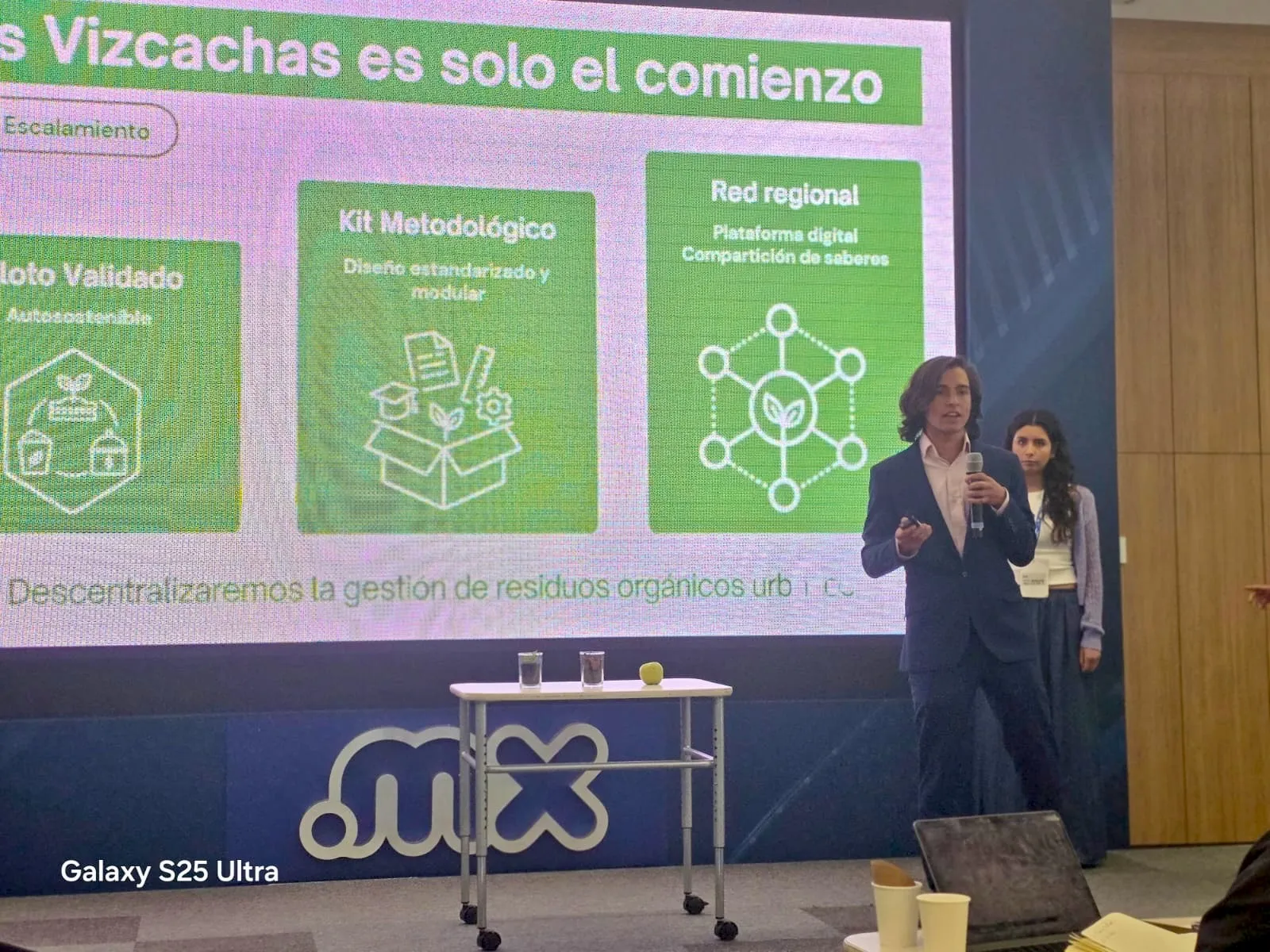 Presenting the scale-up strategy in the final pitch: validated pilot, methodological kit and regional network.
Community
Beyond the award, the most valuable part of Transforma e Impacta was the people. I found friends from Chile, Mexico and Colombia who don’t just care about the climate but want to work on concrete, local, community-based solutions: people who believe, like I do, that a solarpunk future is built neighborhood by neighborhood, with the people who already care for their land.
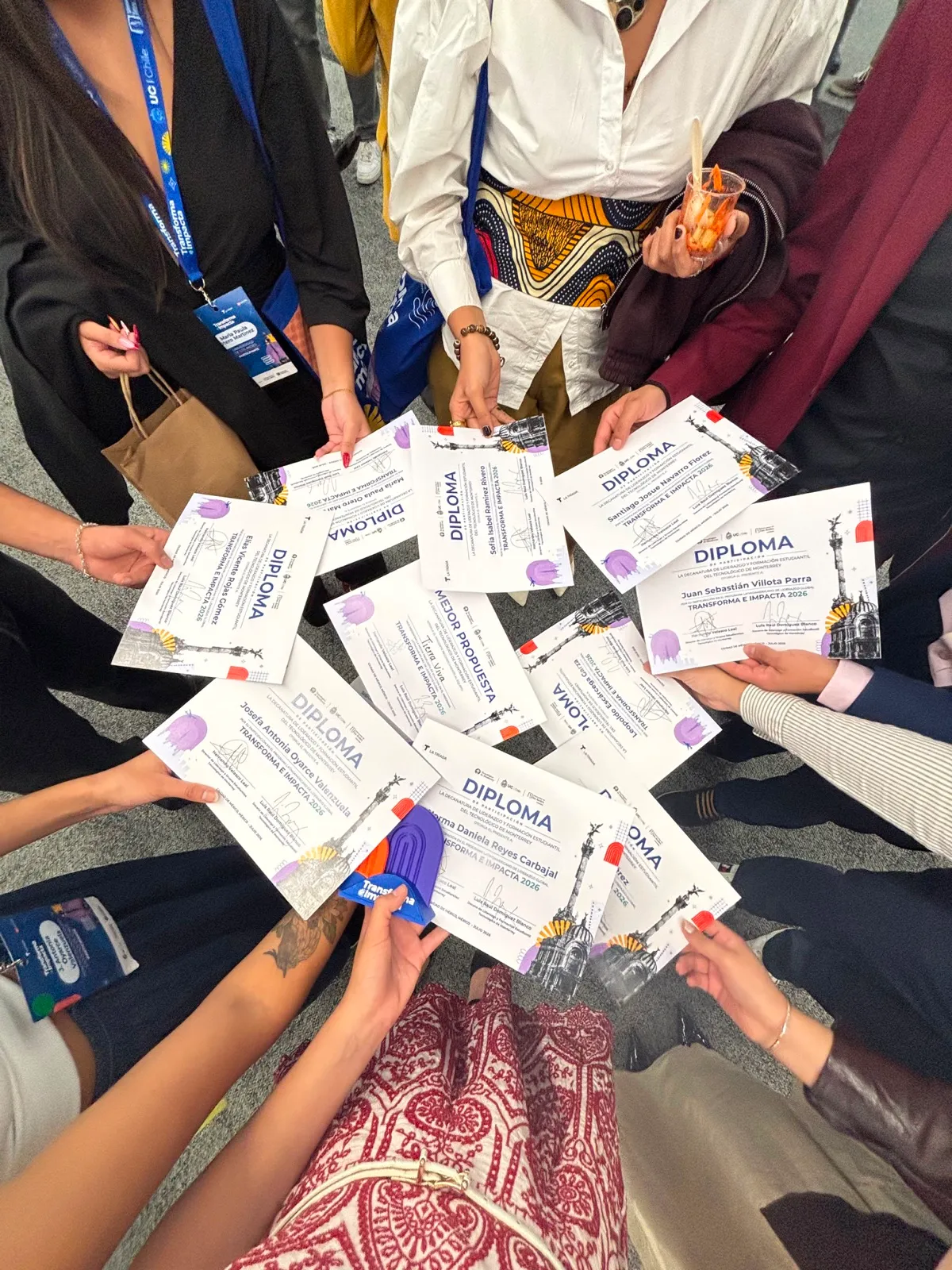 The Best Pitch and Best Proposal diplomas.
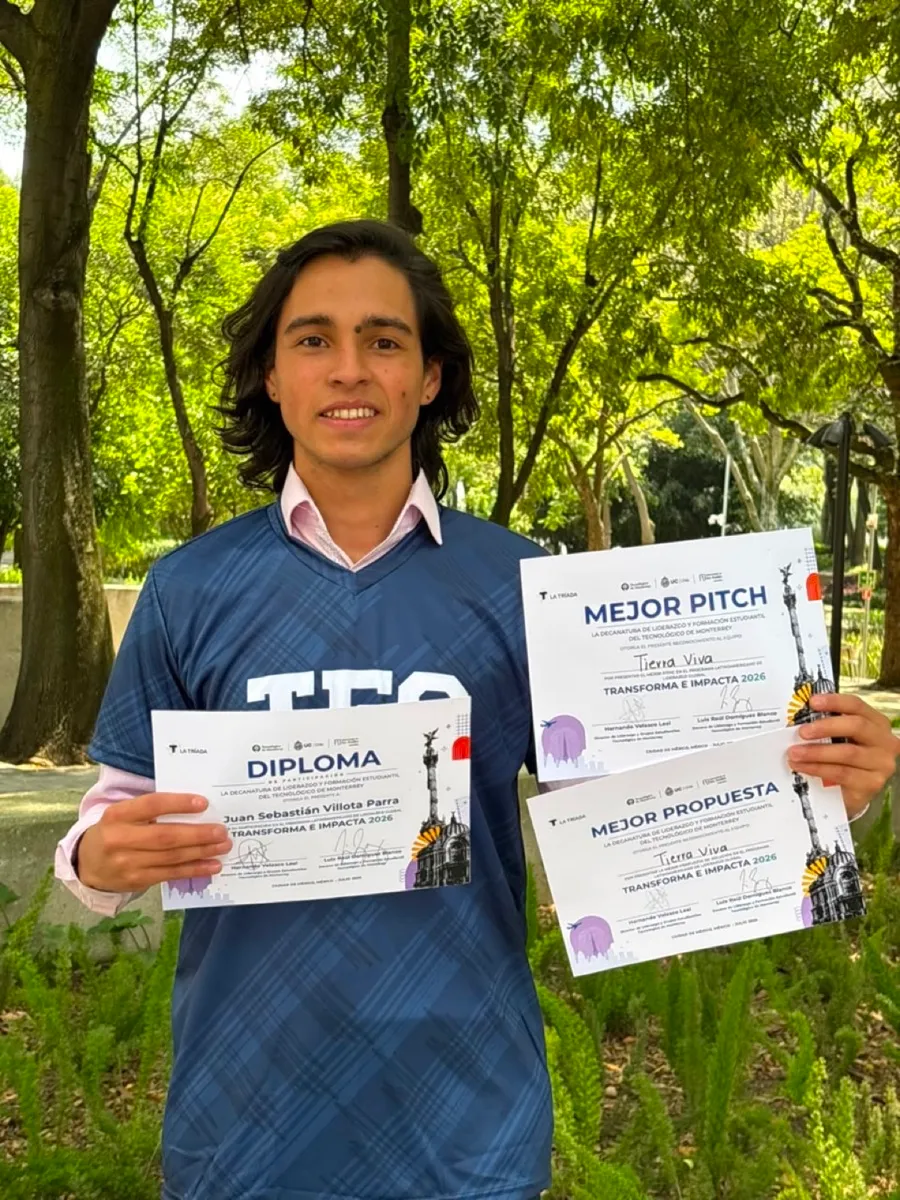 With the awards in Mexico City.
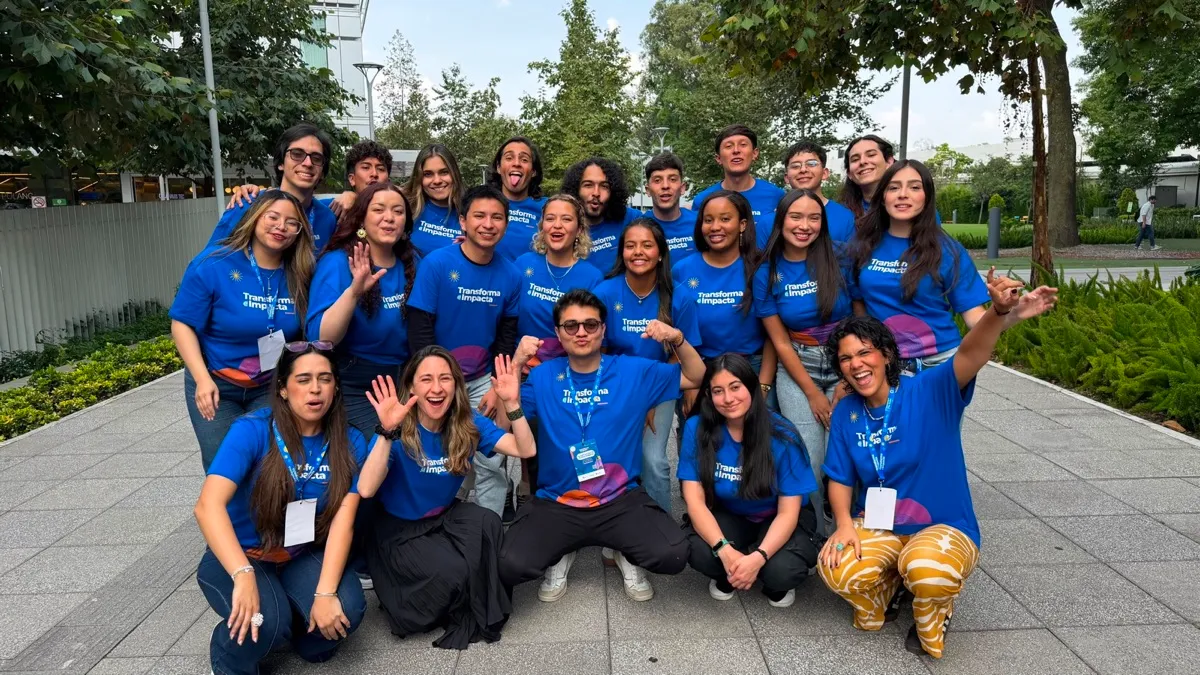 The program participants.
From Chile to Bogotá
What I learned here about biodigestion with communities I am now applying in Bogotá: at CarbonU we secured funding for a similar system at the Paloquemao market, with a biodigester and a pyrolyzer operated by the market’s workers.