We live on a sick planet
The planet’s vital signs
We live on a sick planet. Just as a doctor checks your blood pressure, sugar and temperature to see if you’re okay, Earth science looks at nine vital signs of the planet. In 2009, the Swedish scientist Johan Rockström called them planetary boundaries: climate, biodiversity, freshwater, forests, the ozone layer, the chemicals we release into the environment, among others. For each one he defined a safe range, the space in which humanity can live without destabilizing the planet. If we measure today, the patient is in bad shape, but we know why, we know what to do, and we’ve done it before!
The planet’s latest annual checkup, the 2026 Planetary Health Check from the Potsdam Institute, found that seven of the nine boundaries have already been crossed, and that all seven are getting worse. Only two are within range: aerosols and the ozone layer. If a doctor told you seven of your nine tests came back bad, my friend, you’d worry.
Let’s go through a few:
- Biogeochemical flows and land use are in bad shape because the way we feed ourselves tries to control the land through monocultures and fossil-fuel-based fertilizers, instead of working with nature’s own mechanisms.
- Biodiversity is in bad shape because, according to the Living Planet Report, monitored wildlife populations have fallen by 73% on average since 1970, and the UN (IPBES, 2019) estimates that around a million species are at risk of extinction. And the fewer species there are, the less resilient ecosystems become.
- Novel entities are in bad shape because we now have microplastics and PFAS even in our brains: a 2025 Nature Medicine study found more microplastic in human brains from 2024 than in those from 2016.
- Climate change and ocean acidification are linked by the biggest human-made damage of all: the destabilization of the carbon cycle.
The two carbon cycles
It turns out the planet’s carbon moves in two cycles. The short one is the cycle of life: plants absorb CO₂, animals release it, and that back-and-forth is more or less balanced, but it needs a little of that carbon to move into the long cycle. The long one takes millions of years: dead plants and animals that were buried and turned into coal, oil and gas. That carbon was stored in rock, out of play.
What we did starting with the Industrial Revolution, and especially since the 1950s, was pull out those geological blood clots and dump them into the atmosphere in just two centuries. If the long cycle takes millions of years to store carbon and we release it in two hundred, of course the patient gets sick.
The planet is losing its defenses
But careful, because the worst part isn’t the fever; it’s that the body is losing its defenses. A healthy planet has resilience: some capacity to absorb those changes, a shock absorber. That shock absorber is the ocean. The ocean has swallowed about 90% of the extra heat we’ve generated, and in the process it has become more acidic, making life hard for corals. The problem is that a shock absorber holds and holds until it bursts, and from then on everything destabilizes.
That’s a climate tipping point: a threshold beyond which the system changes state and doesn’t come back on its own, even if you stop pushing it. Planetary boundaries are one thing, and there are nine; climate tipping points are another: the reference study (Armstrong McKay et al., Science, 2022) identified sixteen, nine global and seven regional. They’re like strategic zones on the map (the Amazon, permafrost, corals, the Atlantic circulation) that work a certain way under normal climate conditions but, where we’re heading, can trigger vicious cycles that amplify the problems.
We’ve already crossed the first one. According to the 2025 Global Tipping Points Report, at 1.4 degrees of warming, warm-water coral reefs are already crossing their tipping point and dying like never before. That means it’s not enough to stop harming them to bring them back: we have to actively restore them and bring warming back down toward one degree.
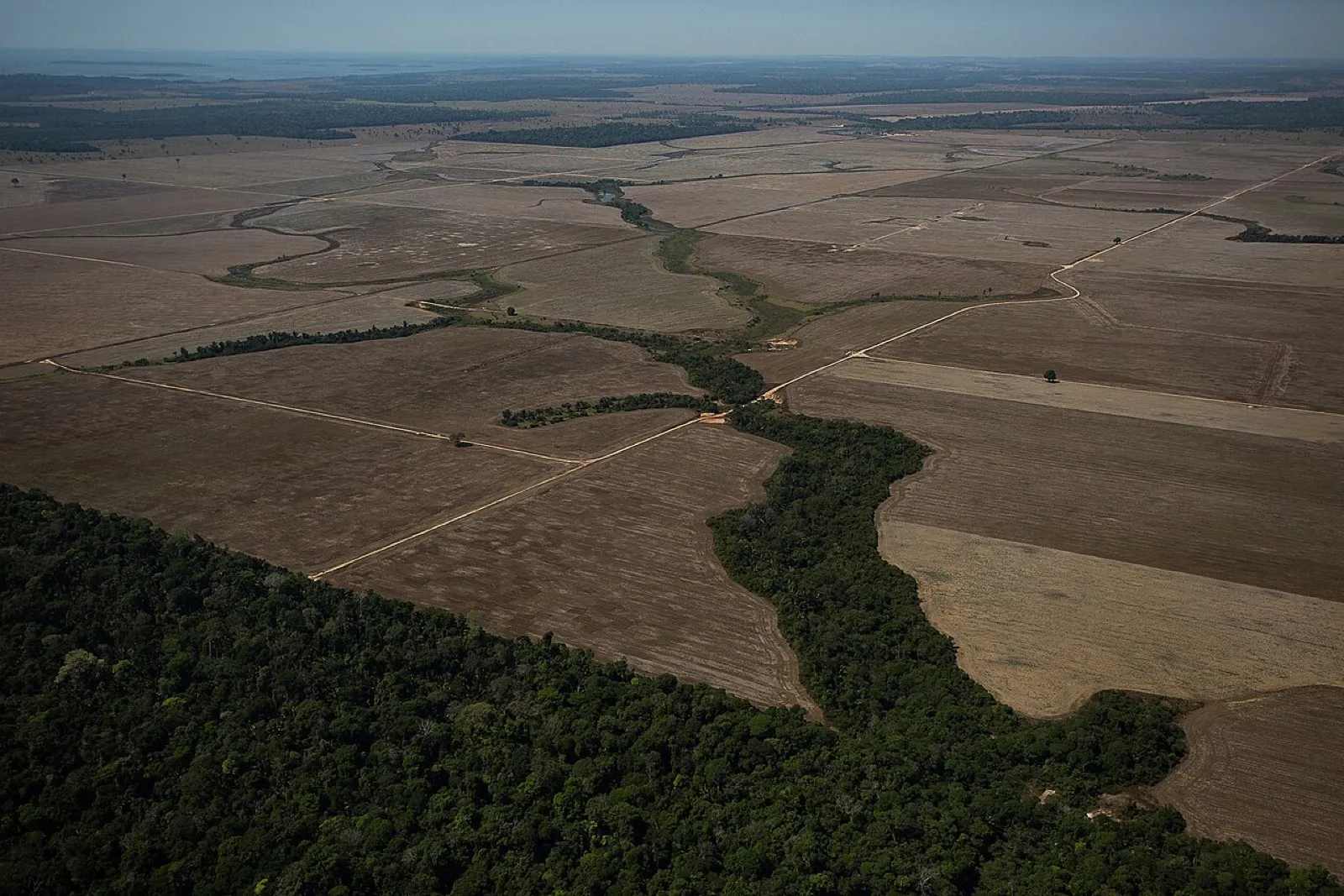
The next ones in line are close. Take the Amazon: if we deforest 20–25% and leave it alone, it regenerates by itself; but if we go past that, game over, it loses the ability to recycle its own rain and turns into a giant savanna. And guess how far we’ve gone? About 17% of the Amazon has already been cut down, and a similar share is degraded. That’s why it hurt so much when this government revoked the resolution that kept the Colombian Amazon free of new fossil fuel projects: it was a brake right before the edge. We have to stand firm in Colombia for our Amazon.
The world is awful, and it’s also better
Now, there’s always someone who says, “but Sebas, the world has never been better.” And they’re right: Our World in Data, which is like a national statistics office for the whole world, shows that we live longer and that extreme poverty has fallen a lot. They sum it up in a phrase I love: the world is awful, the world is much better than it used to be, and the world can be much better. All three are true at once. The thing is, much of that progress was paid for by burning the same fossil fuels that now have the patient in the ICU.
We’ve healed the planet before
What gives me hope is that the planet was already sick with something else, and we cured it. In the eighties we discovered a hole in the ozone layer, realized the culprit was the refrigerants in our fridges, the world signed the Montreal Protocol, banned the gases that were destroying it, and today that boundary is back within range (the UN expects the hole over Antarctica to close around 2066). That proves two things: that science doesn’t exaggerate, because when the treatment is right the patient gets better, and that global cooperation is possible.
Today, the Fossil Fuel Non-Proliferation Treaty initiative, which Colombia endorsed in 2023, is trying to do for fossil fuels what we did for the ozone layer. And I know that very soon there will be a solarpunk revolution that makes them obsolete.
A diagnosis is not a sentence
So: there are planetary boundaries and tipping points, we live on a sick planet, with seven of nine vital signs out of range and its defenses failing, and the first organ, the corals, has already started to fail. But a diagnosis is not a sentence: it tells us the cause and it tells us the treatment. The next question is who made us sick, and that answer, which is more uncomfortable, I’ll leave for the next essay.
Previous essay: Why an engineer talks about climate change (and what solarpunk is).
Cover photo: deforestation frontier in Rondônia, Brazil. Bruno Kelly / Amazônia Real, Wikimedia Commons (CC BY 2.0).