2024 - today
Innovation, Transfer and Entrepreneurship Ecosystem
How a research idea becomes a product, a company or a transfer to industry, and how to build a culture that makes it possible.
A climate technology that stays in a lab doesn’t cut a single tonne of CO₂. The Innovation, Transfer and Entrepreneurship Ecosystem of Universidad de los Andes is where the university community and industry work together to turn knowledge into products, services and companies with social and economic impact. I work on exactly that step: from research result to market, and from idea to venture.
Culture and Entrepreneurship Professional (2026 - today)
The Ecosystem is part of the Vice-Presidency for Research and Creation and acts as a facilitator of the whole transfer process: it connects researchers, entrepreneurs and partners at each stage of an innovation project, from idea to product. Such a project matures along several dimensions at once (technology, business, market and team: TRL, BRL, MRL and TMRL), and its success depends as much on the technology as on the people and culture around it. It is organized into three offices: Technology Transfer and Intellectual Property, Co-development and Partnerships, and Entrepreneurship and Culture, where I work full time.
The Culture line aims for the university’s research to have a real impact on the country, training the community in three areas: mindset (entrepreneurship as a life path, and researching is not the same as innovating), skillset and toolset (pitch guides, patent-reading guides and technology scanning guides). It works on three fronts:
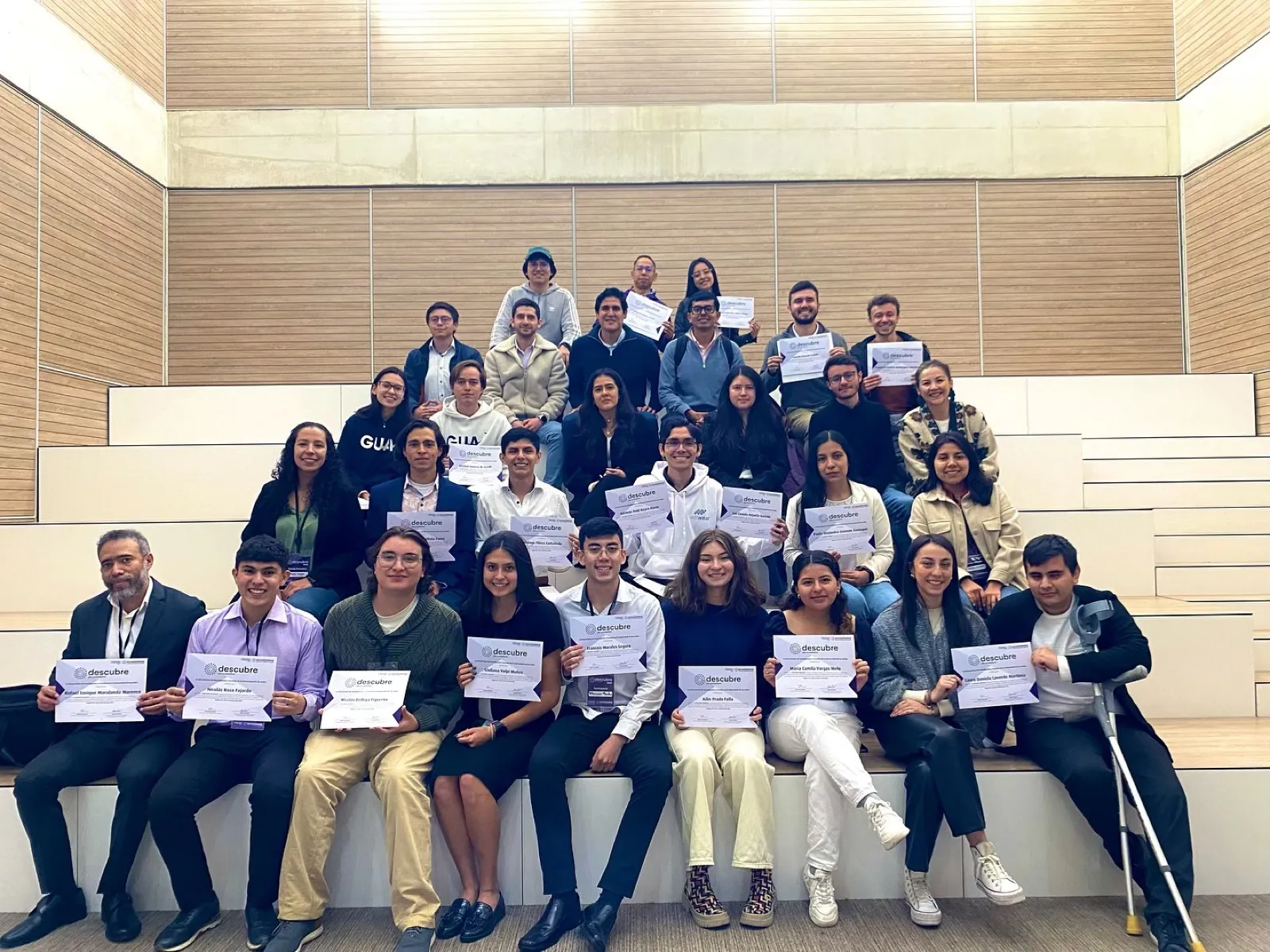
- Seed, the people: sessions in undergraduate courses across faculties, with talks on motivation, intellectual property and pitching, and interviews with guest entrepreneurs to show that innovating and starting a company is possible. This is where Descubre sits, the Ecosystem’s bootcamp to discover science- and technology-based ventures, whose next edition I am organizing.
- Soil, the conditions: incentives and recognition so faculty and students start ventures, and entrepreneurship as a capstone option, with proposals for the Engineering, Sciences and Architecture and Design faculties and coordination with the Innovation Node’s master’s and doctoral programs.
- Networks, the capabilities: connecting the university’s capabilities (labs, knowledge and people in each faculty) and measuring their innovation capacity.
Across all three, I build and maintain the line’s indicators (courses reached, faculty and students engaged) and the databases of faculty, courses and guests, so the Vice-Presidency can measure the Ecosystem’s impact.
Research assistant (March 2026 - today)
As a research assistant I support the From Lab to Market course of the Master’s in Innovation Management, on how to take research results to products and companies. I help design readings, workshops, quizzes and video scripts, in a format also suited to open platforms such as Coursera.
The main research work was co-building an R&D-based innovation model. The model connects technology readiness stages (TRL), from proof of concept to prototype to industrialization, with the milestones, deliverables, processes and training a team needs at each stage. We applied it to real technology transfer cases from the university and from industry. The details of the model and the cases are confidential; here I only describe the kind of work.
To ground it, I researched innovation models (Kline and Rosenberg’s chain-linked model, stage-gate, design thinking and lean startup), readiness levels that complement TRL, and intellectual property and patents.
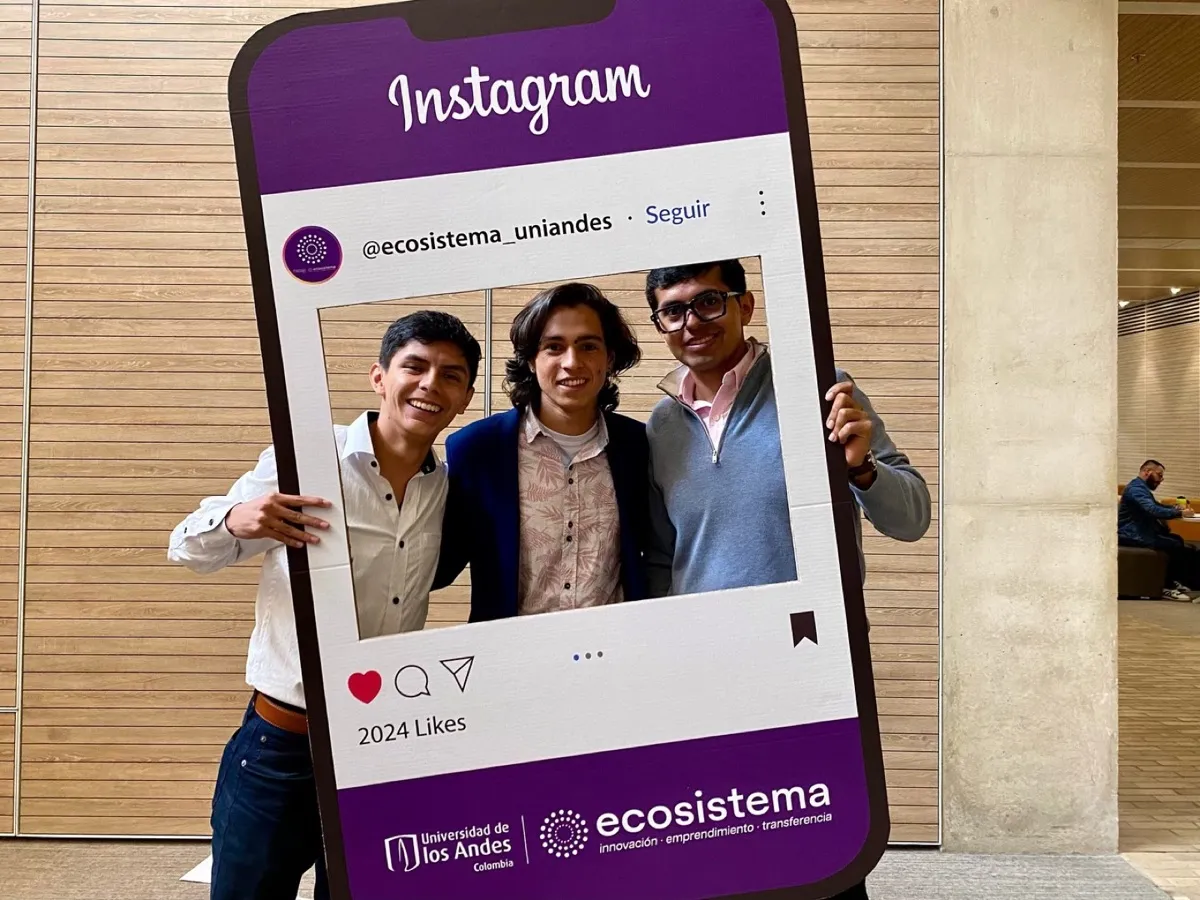 At the Uniandes Innovation, Transfer and Entrepreneurship Ecosystem.
Innovation assistant (2024 - 2025)
I started as a student assistant. I ran a survey and wrote a report to redesign the Descubre course as a self-paced version, applied an innovation and entrepreneurship rubric to the curricula of three engineering programs (Systems, Industrial and Mechanical), built a database of alumni entrepreneurs to interview and managed the calendar of innovation events.
The bridge to CarbonU
I did the CCS technology and market scan for my thesis inside the Ecosystem. That’s where both worlds met: designing a carbon capture machine and thinking from the start about who will use it, at what cost and through which transfer route. See CarbonU and the thesis.
Why it matters for cleantech
Climate technologies fail more often on the road to market than on the physics. Knowing how to read a technology’s maturity, design its stages, manage its transfer and train the people who will take it to market matters as much as designing the machine. And a solarpunk transition doesn’t depend on technology alone: it needs a culture willing to build the companies that make it real.
Previous chapter: CarbonU · Next: Solarpunk and music.