
2022 - 2025
Robocol
The robotics club where I learned to manage a complete project, with scope, resources, time, people and motivation in a team of volunteers.
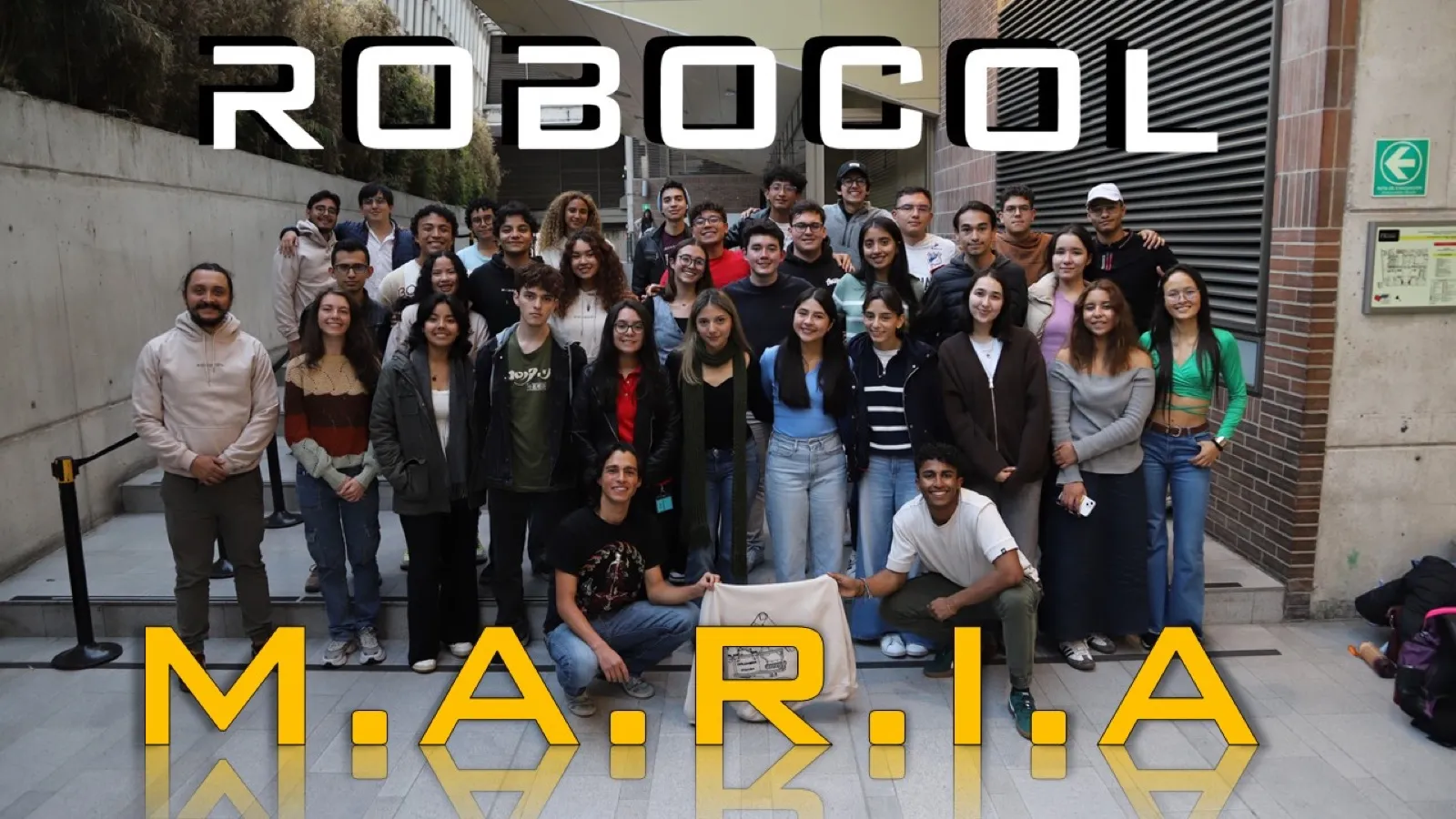
The challenge
Robocol is the robotics team of Universidad de los Andes. It has more than ten years of history: it has competed in NASA Lunabotics since 2010 and was the best Latin American team at the University Rover Challenge (URC) in 2022 and 2024.
When I stepped into leadership, the rover had gone four years without a deep redesign. I led the new rover: seven subsystems (arm, science, motion, sensing, traction, vision and web development) and more than 50 people. All students, all volunteers, with exams on top, no salary and rotating every semester.
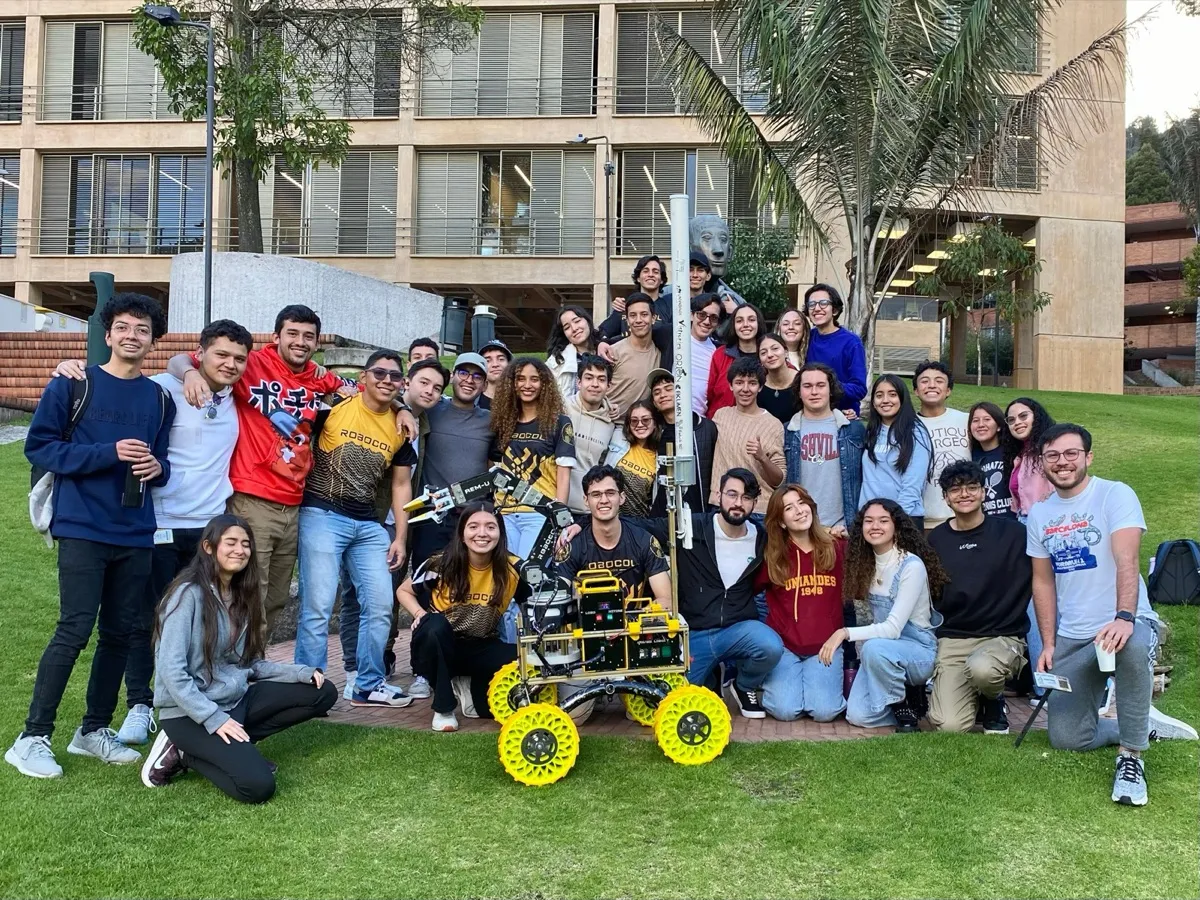 Part of the team with the rover on campus.
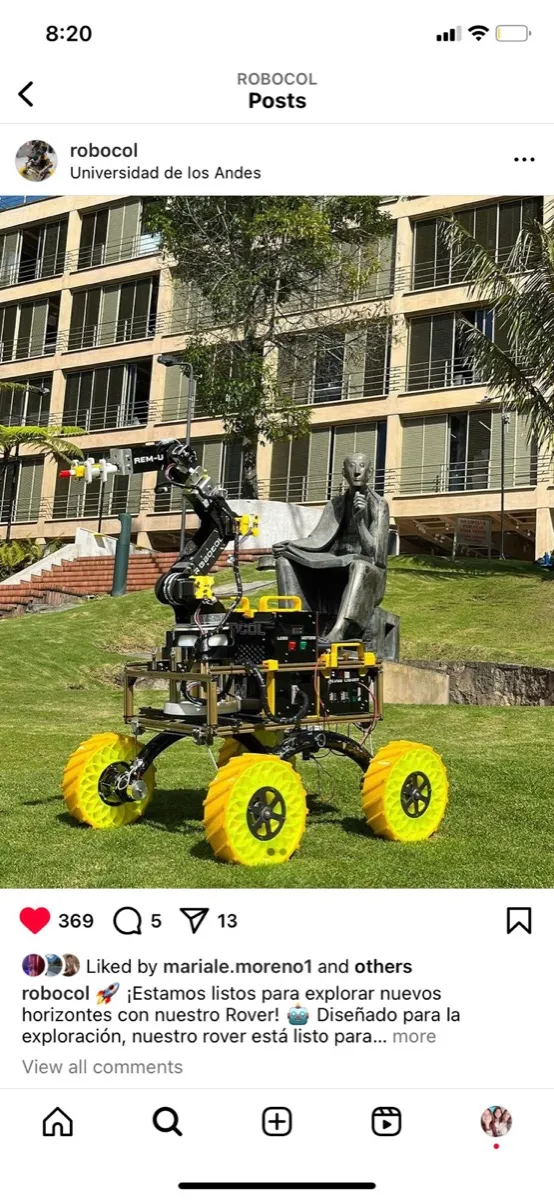 The previous rover, which had gone four years without a deep redesign.
Methodology
A rover can be designed with good engineering and still never get finished. What decided the project was management, and I organized it on five fronts.
Scope
We started from each subsystem’s needs and requirements and built the product tree and the work breakdown structure (WBS) together with the organization breakdown (OBS). That way everyone knew which deliverable was theirs. At the preliminary review the design met 52 of 69 requirements (75%), and that number told us honestly where we stood.
Time
We worked in three-week sprints, with deliverables per subsystem and an integration schedule. The biggest risk of the project was mine: integration between subsystems running late. A perfect arm is useless if it doesn’t fit on the chassis.
Budget
We kept a detailed budget and a bill of materials (BOM) per subsystem. In the risk register we quantified the expected impact of unexpected costs, like components that fail in testing and have to be bought again.
Risk
I kept a register of 16 risks, each with probability, impact and owner. I owned the ones for integration, budget, team and weight: the full rover could not exceed 75 kg.
People and motivation
In a volunteer team, the silent risk is people leaving because of their course load. We mitigated it in two ways: scheduling milestones outside exam weeks and training new members with Inventor workshops that I taught, so they could contribute quickly.
Result
We built a new rover in just over a year: MARIA (Martian Autonomous Rover for Investigation and Assistance).
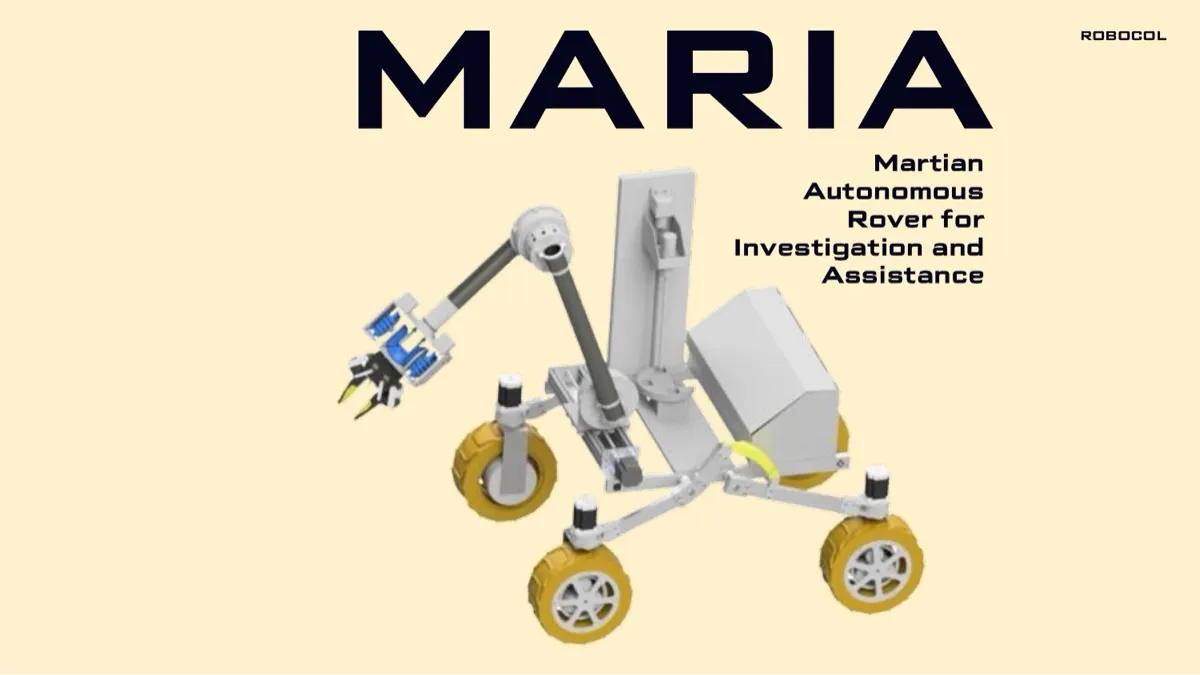 MARIA in CAD: the full rover, with the arm, sensing and traction integrated.
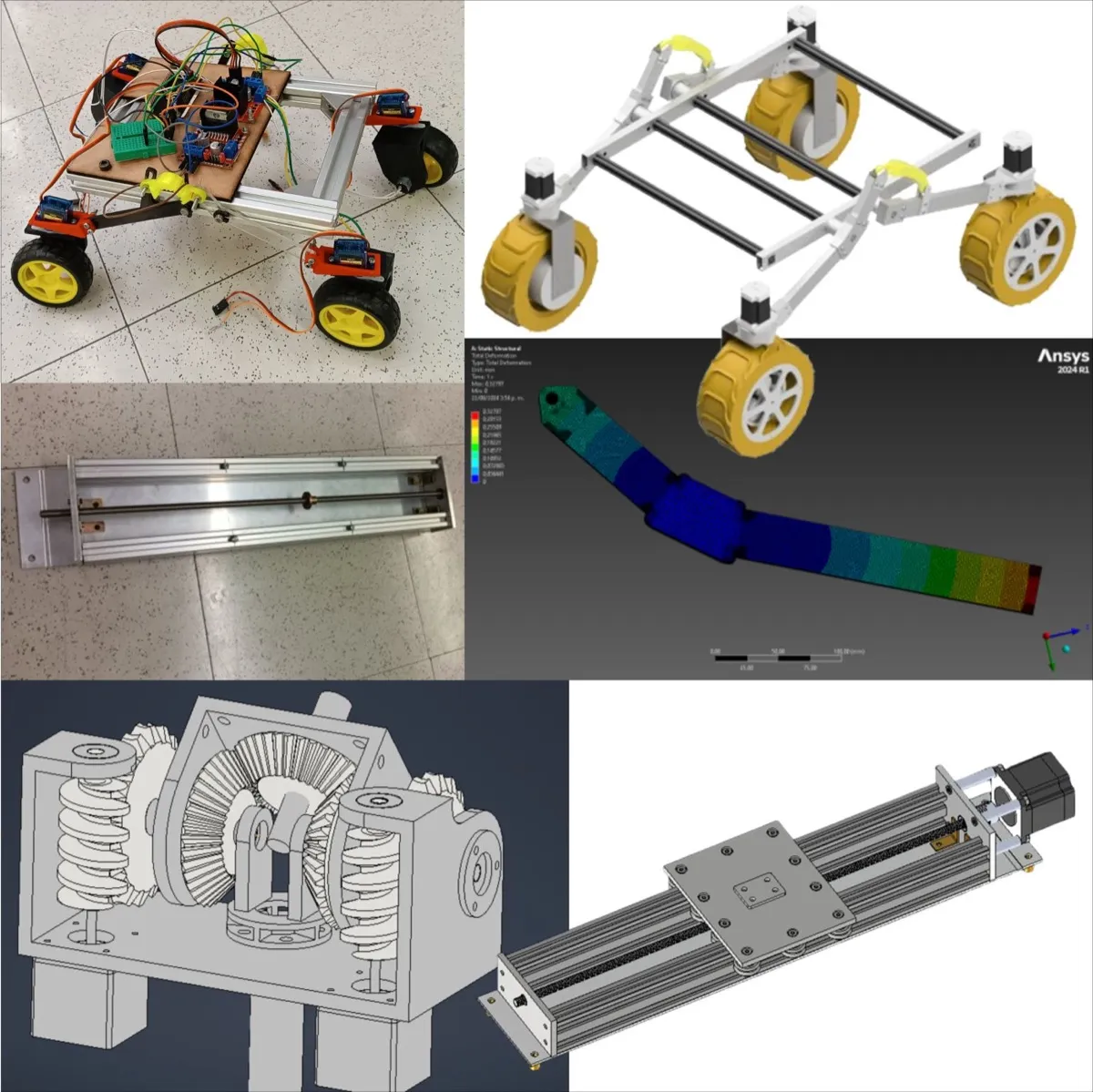 Some of the rover parts in CAD and simulation.
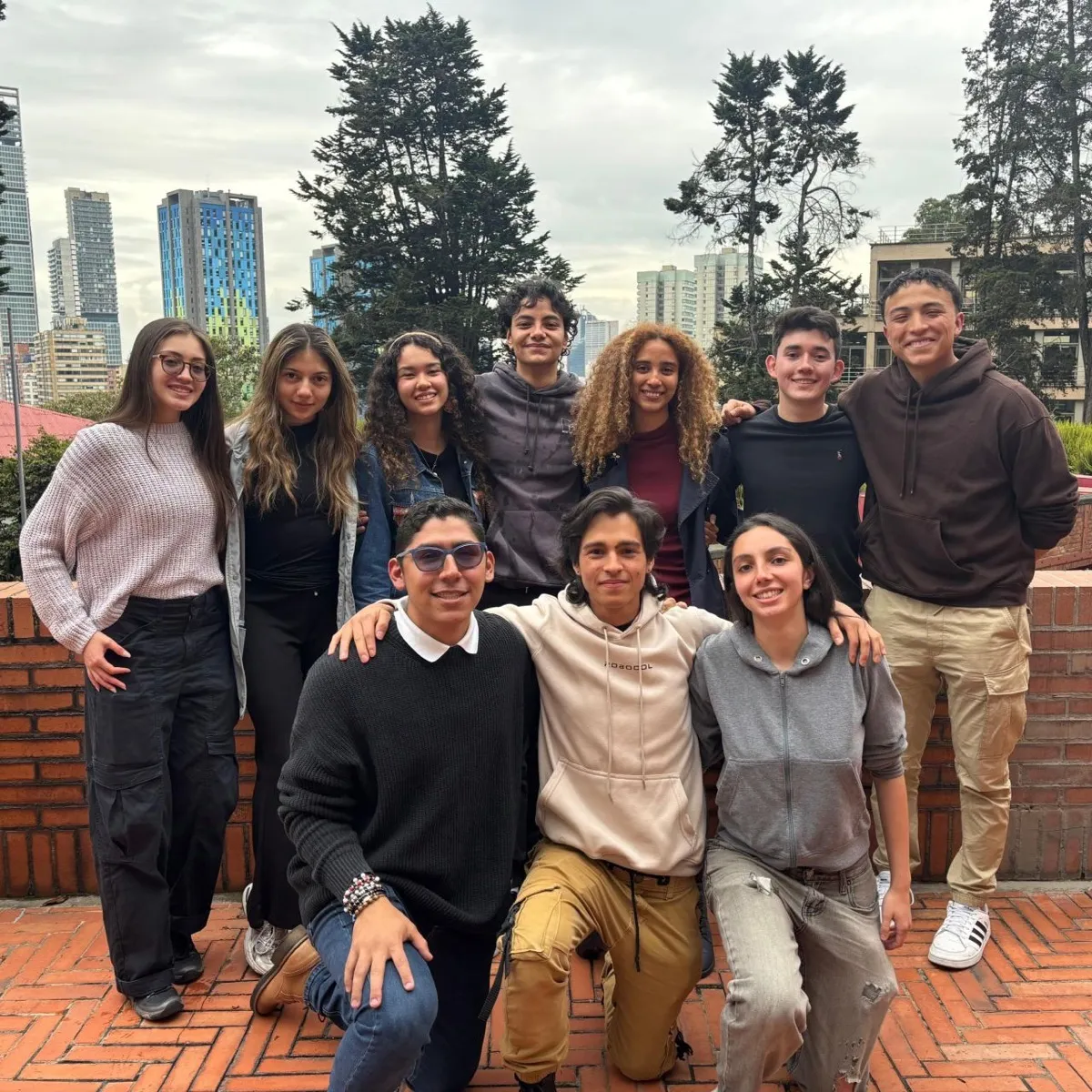 Leadership team of the M.A.R.I.A. project.
Technical leadership
Besides coordinating, I was the mechanical lead.
The 5-degree-of-freedom arm
I designed MARIA’s robotic arm: 5 kg payload, 1 m reach, precision under 2.25 mm, weight under 12 kg and quick assembly. We evaluated concepts with the analytic hierarchy process (AHP), used a 3D-printed differential wrist and applied design for manufacturing and assembly (DFMA) and geometric tolerancing (GD&T) to links and gearboxes.
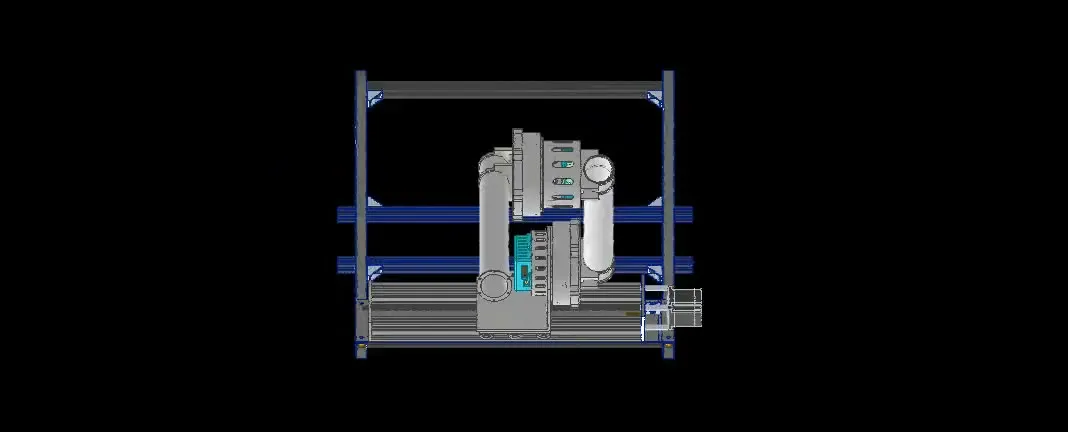 MARIA’s 5-DOF arm in CAD.
Earlier, for the 2024 University Rover Challenge, I did the CAD of the 6-DOF arm the team competed with and supported the models for the Gazebo simulation.
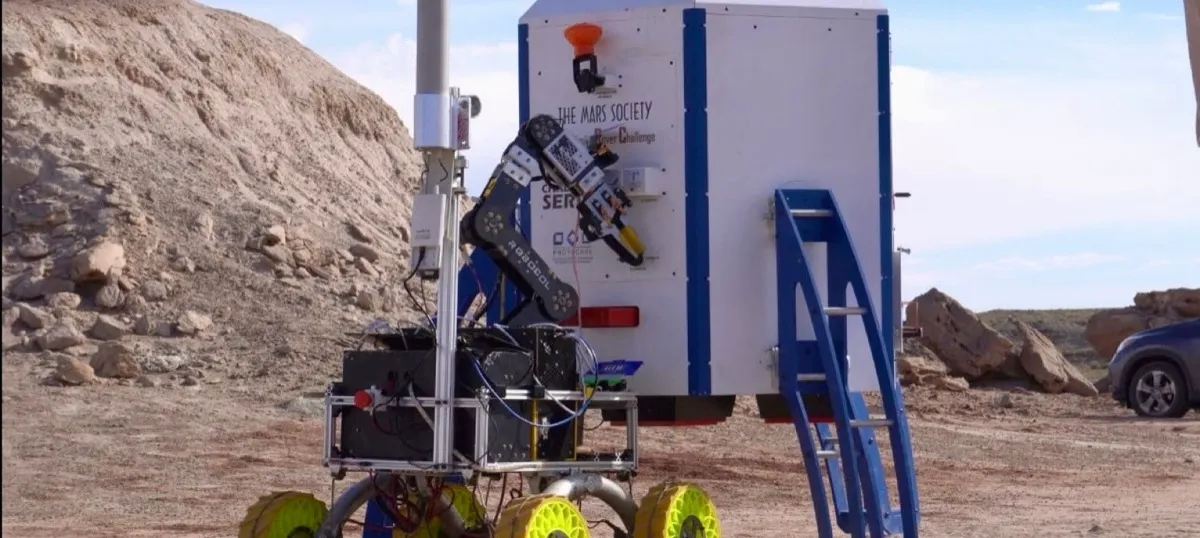 The 6-DOF arm at URC 2024.
The arm has its own entry in my work: 5-DOF robotic arm.
A simulation that changed the design
When we simulated the chassis with integrated rails (200 N and 80 N·m of load), we saw that the rails deformed the aluminum extrusions. We changed the architecture: the rails moved onto a plate. It’s the kind of decision I show in FEA applied to design decisions.
Lessons learned
Robocol was my project management school. I learned to manage scope, budget, time and people at the same time, and that in a volunteer team motivation is also managed: nobody stays out of obligation, they stay because they understand what their part is for.
Robotics for a solarpunk future
Robocol is a closed chapter, but it left me a way of thinking in systems: many subsystems that have to work together under weight, budget and time constraints. It’s the same logic I apply today to carbon capture at CarbonU.
Previous chapter: Solarpunk and music · Next: University.
Projects from this chapter
5-DOF robotic arm for MARIA, the Robocol rover
A five-degree-of-freedom robotic arm for the Robocol rover: lead-screw linear rail, cycloidal reducers at the shoulder and elbow, differential wrist and interchangeable grippers. I designed it as mechanical lead.