2022 - 2026
University
A mechanical engineer who learned to design, to simulate, to lead teams and to measure the impact of what he designs.
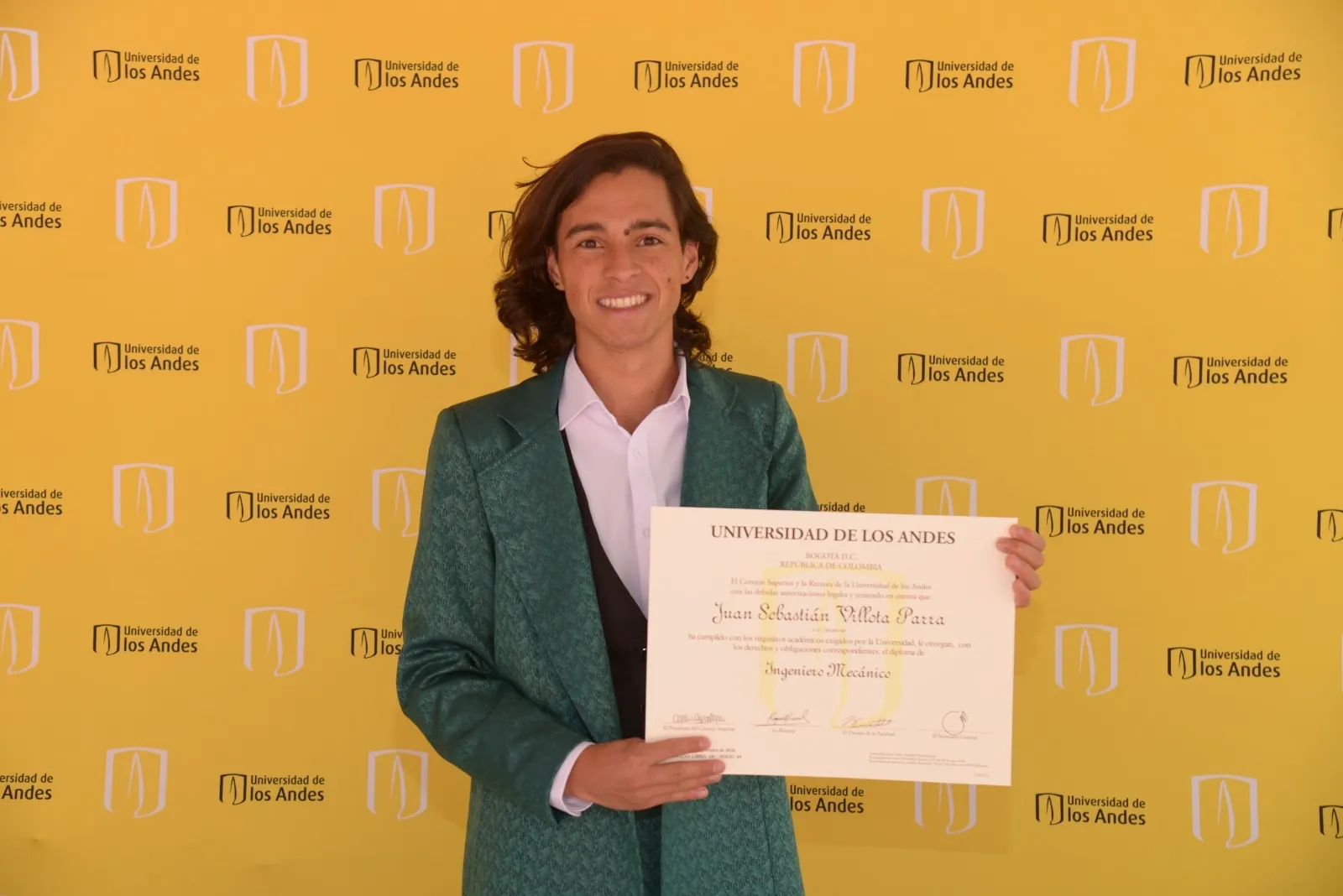
I studied Mechanical Engineering at Universidad de los Andes, in Bogotá. Rather than a list of courses, this chapter summarizes the technical capabilities I developed and the projects where I applied them.
1. Computer-aided design and simulation
I started with Autodesk Inventor in CAD Tools (semesters 1 and 2): parametric modeling of parts and assemblies, manufacturing drawings, generative design and dynamic simulation. That foundation is behind the Inventor workshops I later taught at Robocol and the detailed design packages I delivered in the Leader-Indumar consulting project.
In Computational Tools (semester 4) I worked with Python and Jupyter across 14 workshops: symbolic computation, systems of equations, linear programming optimization, differential equations, Fourier transforms applied to accelerometer data and data-driven modeling, with a final computer vision project. It is the foundation of the integrated Python model in my thesis.
The tool I enjoyed most was the finite element method. I started with trusses in Mechanics of Materials, verified against the analytical solution, and in the Finite Element Structural Modeling Workshop I reached nonlinear contact, composite laminates and parametric optimization in Ansys Workbench.
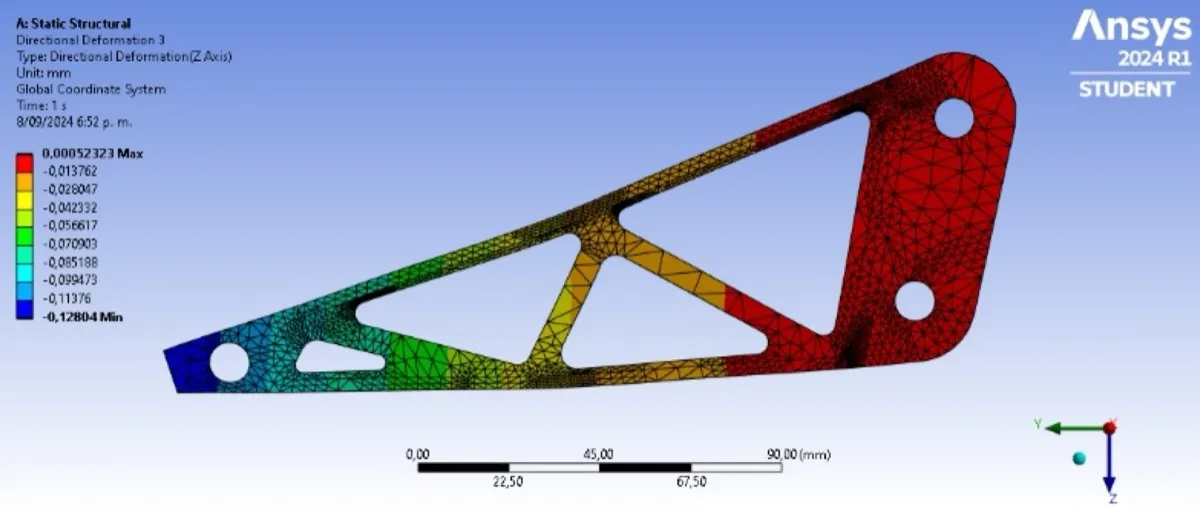 Parametric optimization in Ansys: minimizing Von Mises stress at constant mass. The full process is in Finite element analysis applied to design decisions.
2. Machine design and mechanical systems
- Machine Design: experimental labs on column buckling, thin-walled pressure cylinders, critical shaft speed and permanent and non-permanent joints, comparing measurements with design models.
- Dynamics of mechanical systems: modeling and numerical simulation of dynamic systems in Python.
- Control: modeling and control of a towercopter system in MATLAB, with an experimental setup, and a two-degree-of-freedom cable-driven controller designed in Inventor and 3D-printed.
- Automated systems: data acquisition with thermocouples and processing of experimental signals.
- Materials Science and Engineering: tensile tests on metals and polymers, hardness, materials selection with Granta and viscoelasticity.
3. Leading design teams
At university almost everything is done in teams, and I almost always took on coordination. In order, the projects form a ladder of complexity:
- C-Free (semester 4): I led 5 engineers in designing and building a fluidized-bed separator of coal from sand. First place at the 2024 Innovation Week and third at Pitch Day.
- Fermentation barrel for Verdeser (semester 6): I led 5 people in redesigning a stainless steel fermenter for an artisanal cassava liquor producer.
- Consulting for Leader-Indumar (semester 7): my first industrial client, with the detailed design of an 18-station winder.
- R.O.V.E.R. (semester 8): I led 9 people in the design, integration and validation of an excavation rover under the VDI/VDE 2206 methodology.
In parallel, outside class, I was leading the new rover at Robocol (+50 people) and founded CarbonU (+30).
4. Energy and climate
In the second half of the degree, mechanical engineering met the climate:
- In Energy Conversion I modeled the ML building photovoltaic plant in SAM, ran an energy audit, an economic study of PV self-generation and an analysis of Rankine cycles.
- In Polymer Sustainability I ran the life cycle assessment of a chitin–cellulose biofilter for microplastics in openLCA.
- In Geosciences I studied the Earth system, petrology and glaciers, the basis for CarbonU’s work on geological CO₂ storage.
- All of that led to my thesis: a design tool for CO₂ capture in cement and steel.
5. Teaching
I was a teaching assistant for most of my degree, with more than 200 students in total. Explaining a topic to thirty people at once is the best test of whether you master it: every question sends you back to the theory.
- CAD Tools (semester 2): Autodesk Inventor, with an emphasis on generative design and dynamic simulation.
- Graphic Design Workshop (semester 3): three-dimensional thinking and drawing parts and assemblies in Fusion 360.
- Statics (semesters 3 and 4): force and moment analysis, practice sessions and grading exams and assignments.
- Innovation Ecosystem (semesters 5 to 7): innovation and entrepreneurship assistant; I tell that story in Innovation, Transfer and Entrepreneurship Ecosystem.
Life Cycle Assessment and Decarbonization (2026)
The most complete role was the last one, in a course of the Master’s in Energy Systems Innovation (MISE). Besides supporting the class, I helped plan it: I designed assignments, workshops and the course flow using openLCA to run LCAs of energy systems and decarbonization processes.
During the semester I supported students with the software, the theory of the ISO 14040 and 14044 standards and industrial decarbonization processes. Afterwards I was a tutor in the intersession, in June and July 2026. It brought together three things I care about: teaching, designing a course and the life cycle assessment I learned with the microplastics biofilter.
6. Graduation
I graduated in October 2026 with a GPA of 4.65 out of 5 and received three diplomas:
- Mechanical Engineer.
- Cum Laude, the distinction for GPAs in the top 3% of all School of Engineering graduates over the last five years.
- Minor in Chinese Language and Culture.
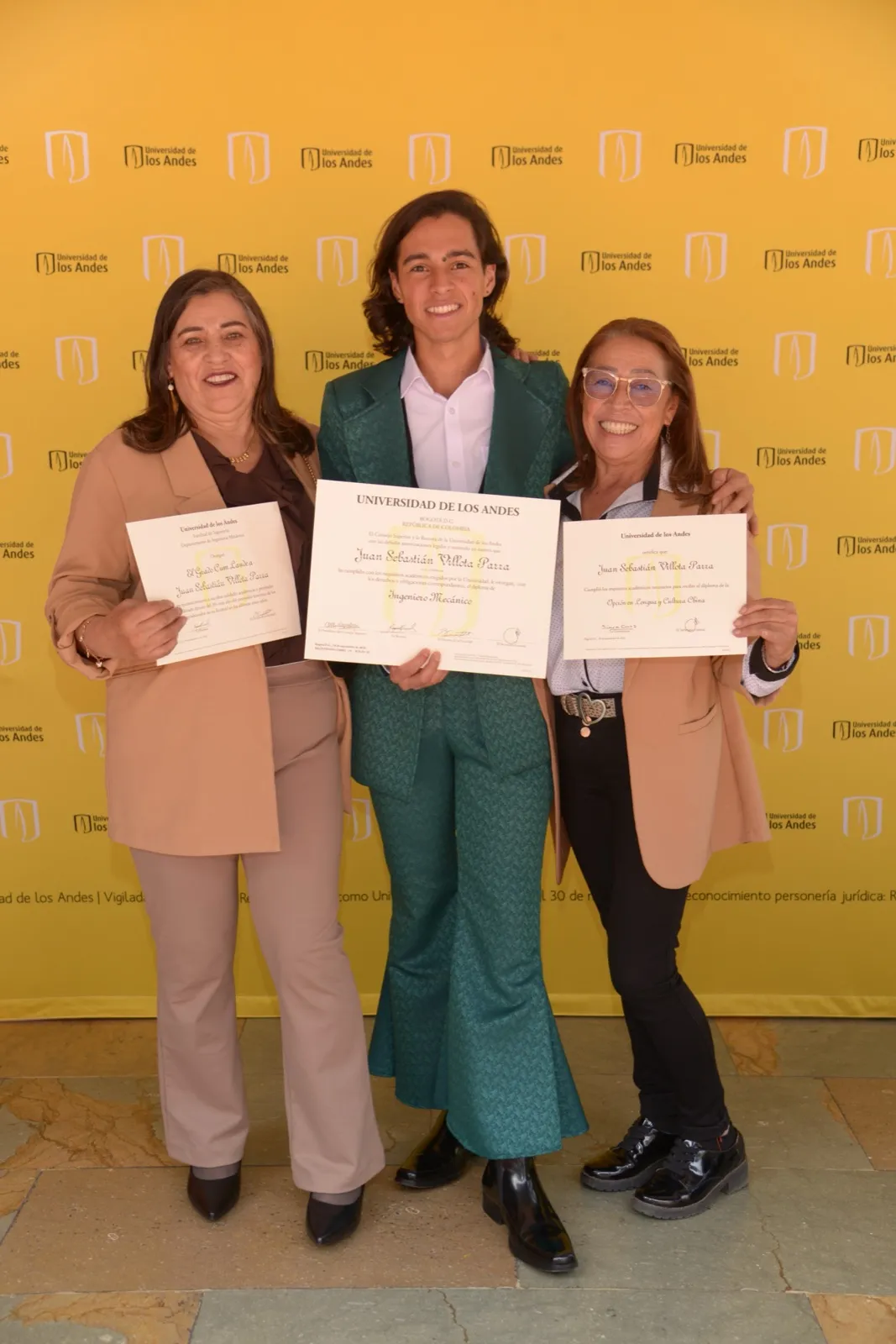 The three diplomas: Mechanical Engineer, Cum Laude and minor in Chinese Language and Culture.
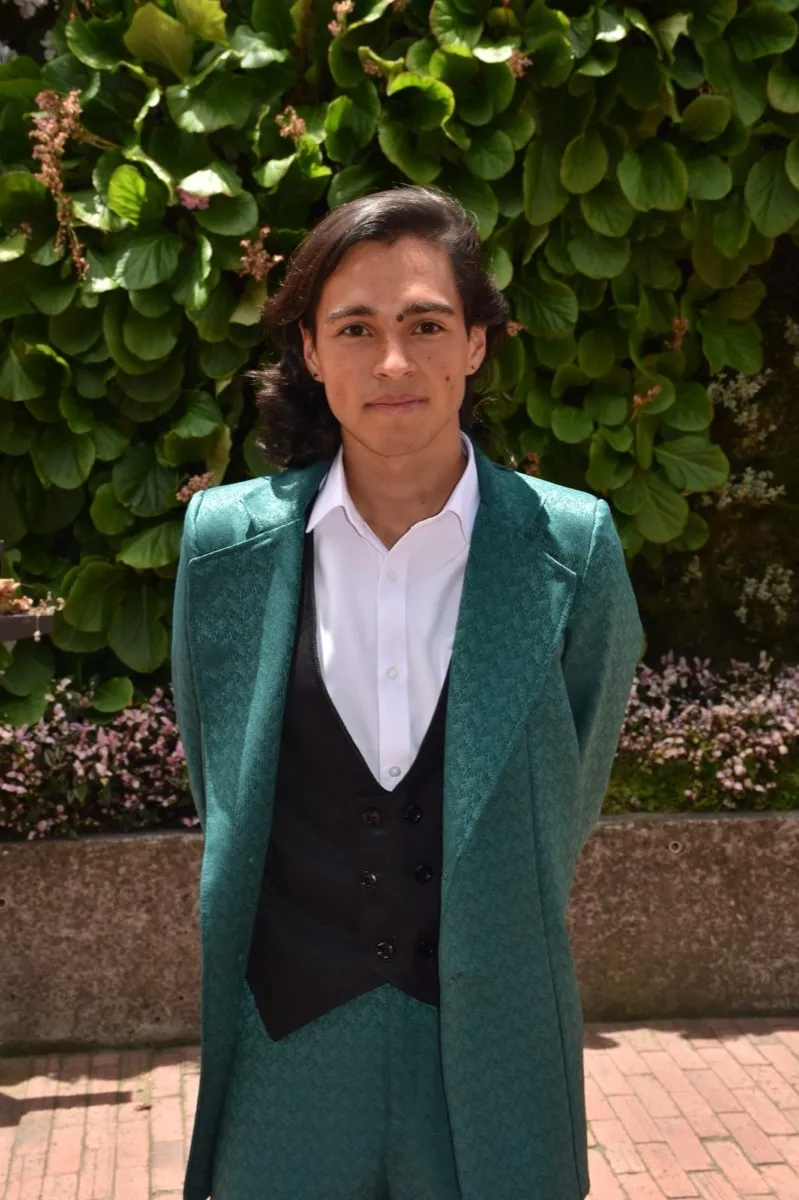 Mechanical Engineering graduation, October 2026.
Previous chapter: Robocol · Next: Childhood and school.
Projects from this chapter
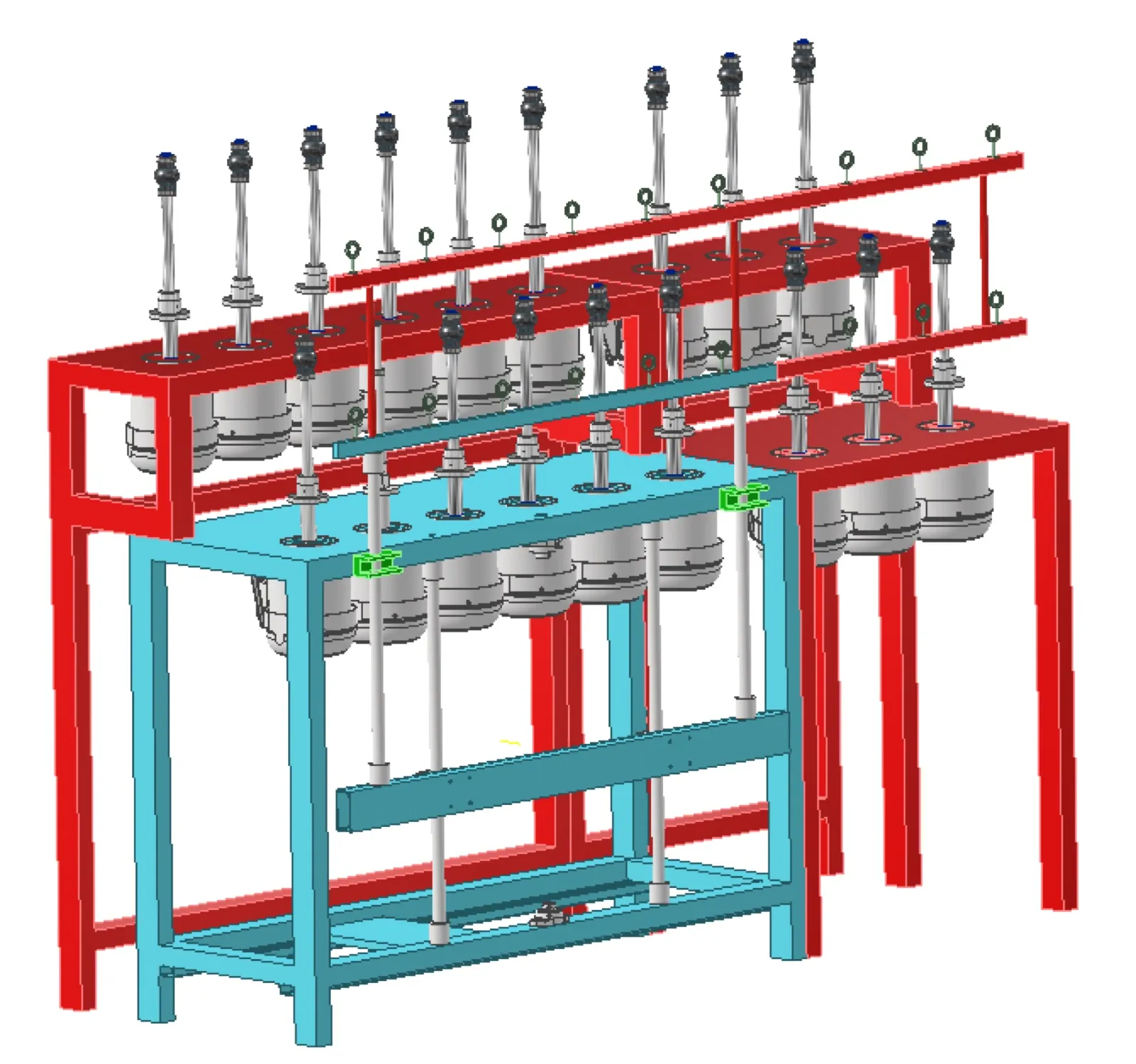
Redesign of a thread bonding machine for Leader-Indumar
Engineering consulting for a Colombian textile company. We redesigned its bonding line to go from 6 to 18 simultaneous threads; I was in charge of the detailed design of the new winder.
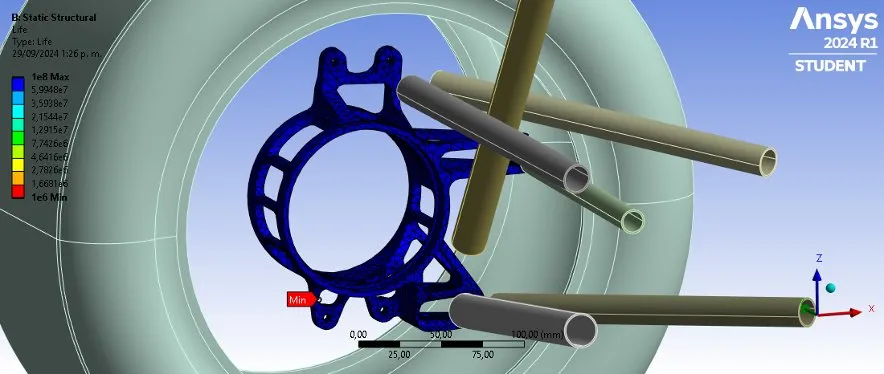
Finite element analysis applied to design decisions
Structural analysis in Ansys Workbench, from verification against analytical solutions to nonlinear contact, composite laminates and parametric optimization, later applied to real design decisions.
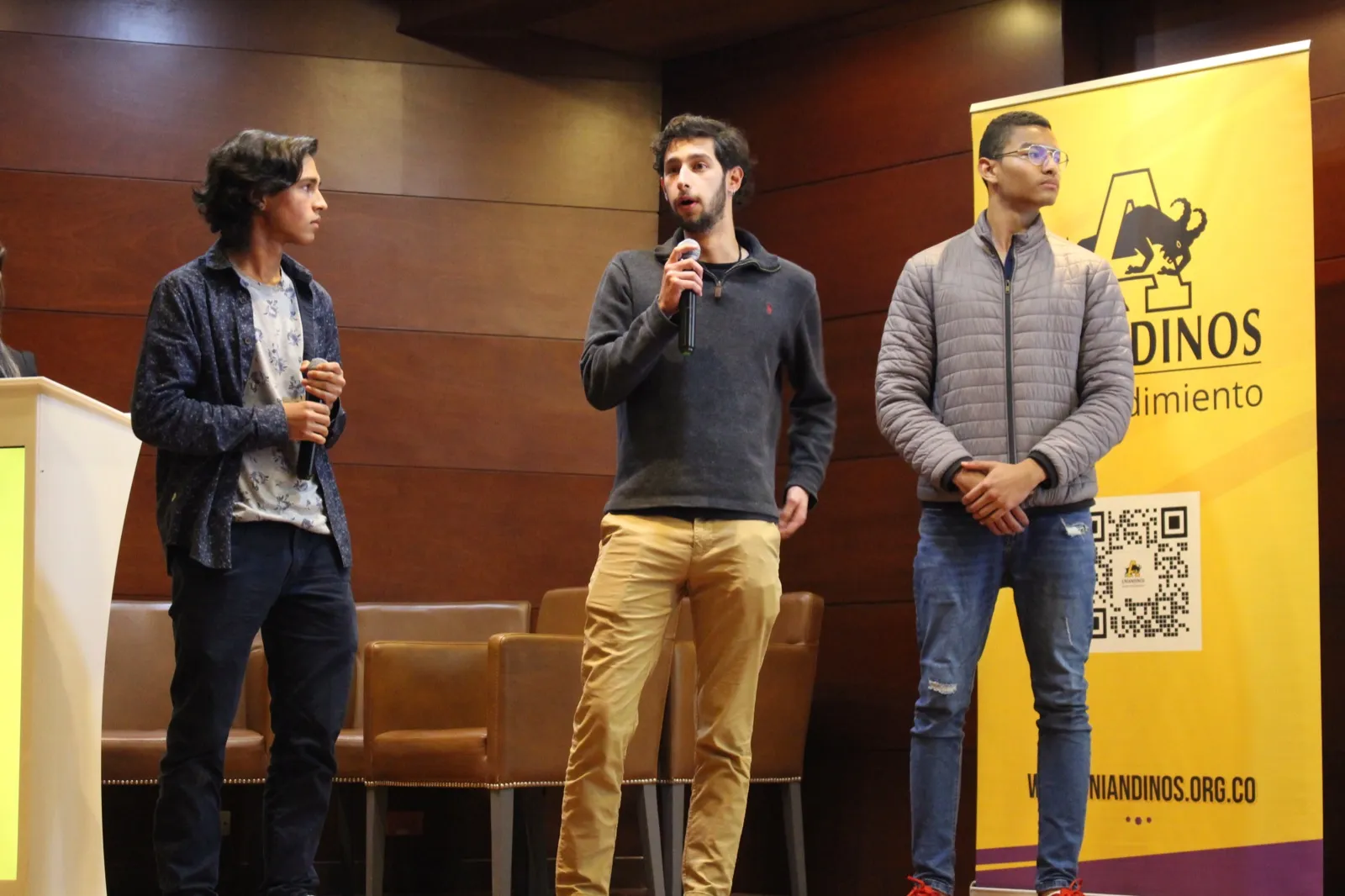
C-Free — a device to separate coal from the sand in Santa Marta
I led a team of 5 mechanical engineers in designing and building a prototype that separates coal dust from beach sand. First place at the 2024 Innovation Week and third at Pitch Day.
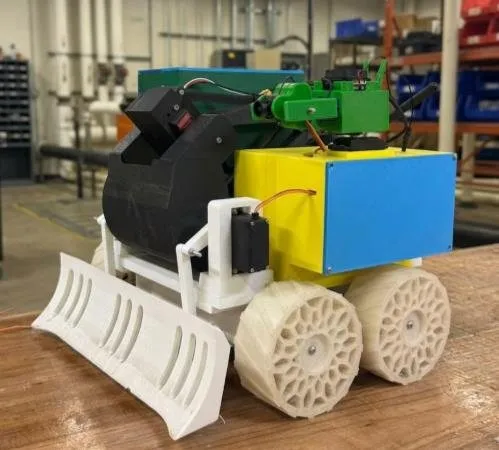
R.O.V.E.R. — a 3D-printed sand excavation rover
I led a team of 9 students in designing, building and validating an FPV-teleoperated rover that digs up and recovers objects buried in sand, following the VDI/VDE 2206 methodology and the ASME IAM3D competition rules.
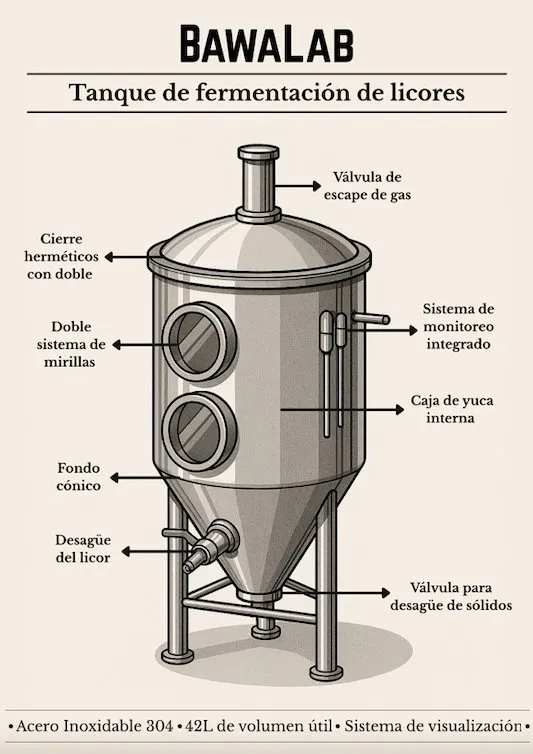
Fermentation barrel for Verdeser
Redesign of a modular, sensorized 304 stainless steel fermenter for an artisanal cassava liquor producer: bus-slot architecture, structural validation, Taguchi design of experiments and cost and reliability analysis.
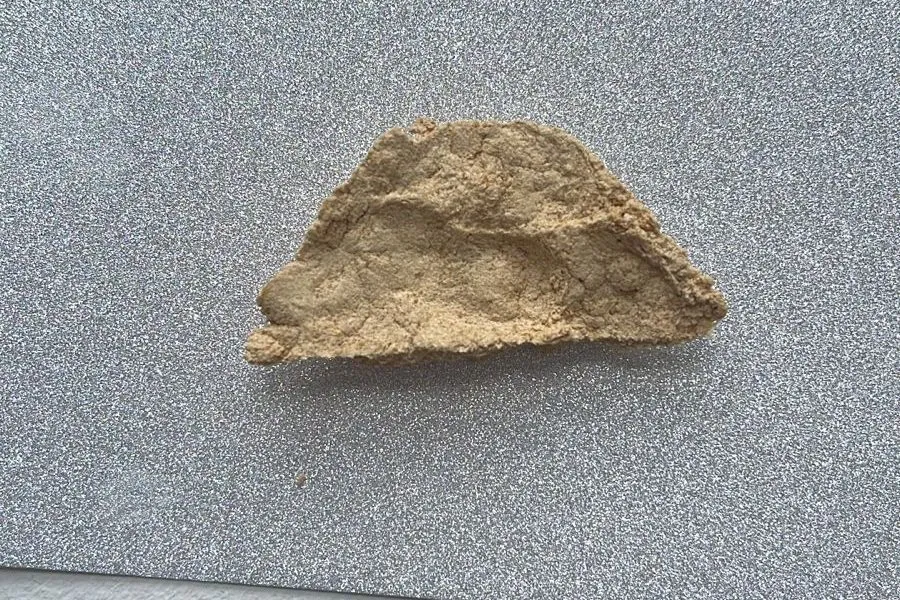
Chitin–cellulose biofilter for microplastics, with life cycle assessment
A regenerable adsorbent foam made from shrimp waste to remove microplastics from drinking water. With this project I learned to run a life cycle assessment (LCA) in openLCA, from scope definition to interpretation, to find where the environmental burden of a clean technology really lies.
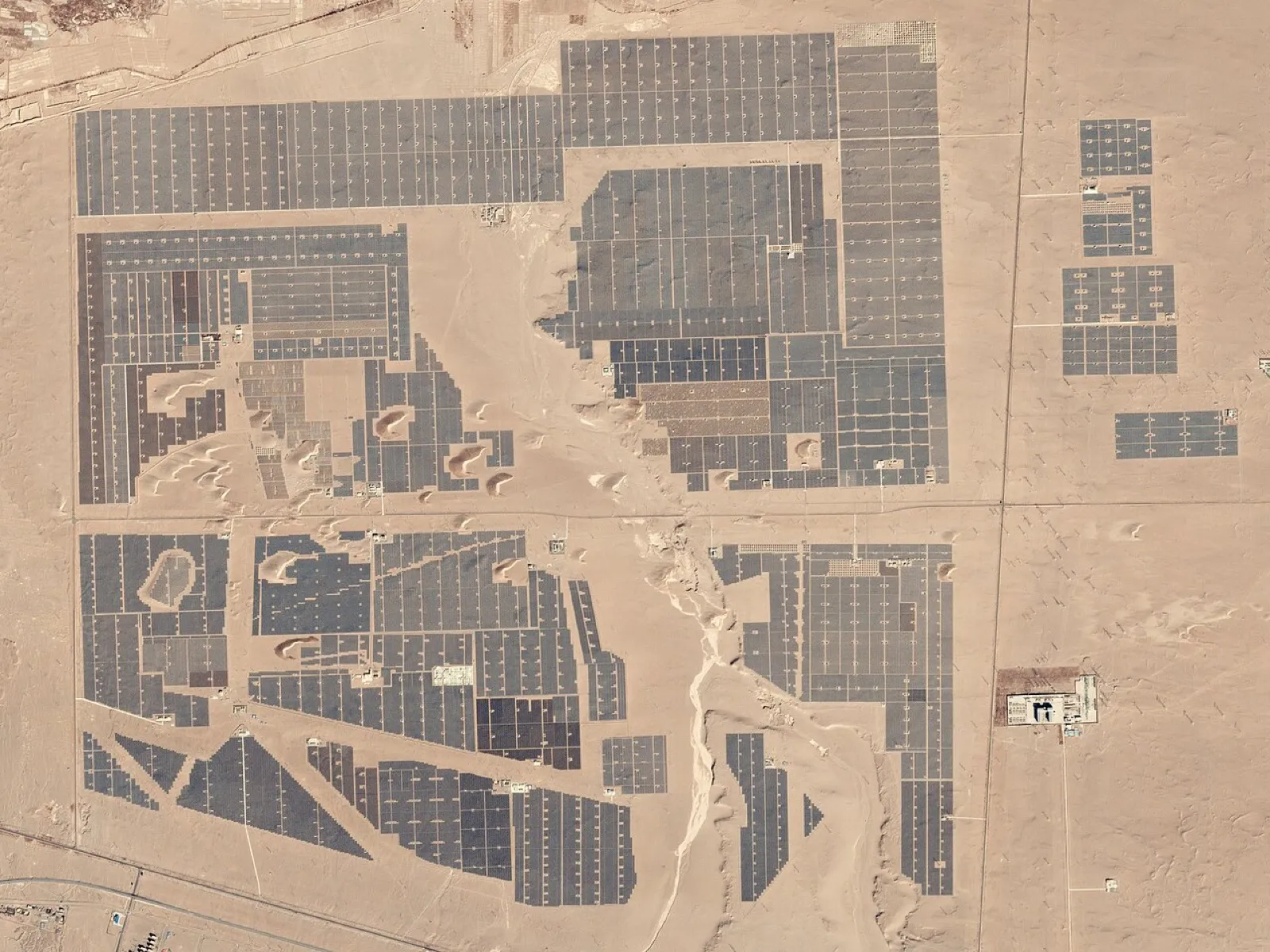
Photovoltaic plant at the ML building
Technical, financial and environmental model in SAM (NREL) of the 15-module photovoltaic plant at the Uniandes ML building, and its scale-up to 100 kW.